

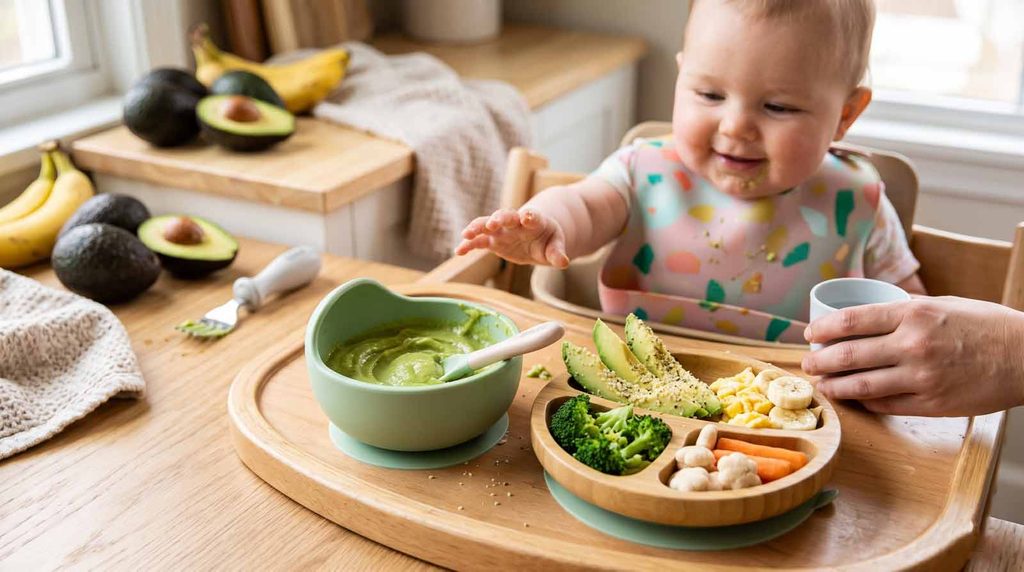
Avocado is a soft, simple ingredient you can turn into smooth puree, mashed avocado baby food, or easy-grip finger foods once your baby is developmentally ready for solids. This guide walks you through choosing a ripe avocado, preparing avocado puree for babies, serving it safely, and moving from spoon-fed bites to self-feeding textures. Use these steps as practical feeding guidance, and check with your pediatrician if your baby was born prematurely, has feeding difficulties, or has allergy or medical concerns.
When is avocado for infants a good first food?
Avocado can be offered when your baby is ready for complementary foods, which is generally around 6 months, not before 4 months. Readiness matters more than the calendar alone: your baby should have good head and neck control, sit with support, open their mouth for food, and swallow instead of pushing food back out with the tongue. The CDC and American Academy of Pediatrics note that most babies can start foods other than breast milk or formula at about 6 months, while continuing breast milk, formula, or both as the main nutrition source early on. (portugues.cdc.gov)
Avocado works well because it is naturally soft when ripe, easy to mash, and mild in flavor. AAP guidance on baby-led feeding lists ripe avocado as an example of a soft food babies can mash with their gums, while the CDC recommends starting with smooth mashed, pureed, or strained textures and gradually moving to thicker, lumpier foods as skills develop. (healthychildren.org)
Gather what you need before mashing
You do not need special equipment to make avocado baby food. A fork is enough for a basic mash, while a small blender can help if your baby needs a thinner, very smooth texture. Keep the preparation simple: babies do not need salt, sugar, honey, or strong seasonings added to first foods, and honey should be avoided before 12 months because of botulism risk. (cdc.gov)
Quick prep checklist:
- 1 ripe avocado with dark, slightly yielding skin
- Clean cutting board and knife
- Spoon for scooping
- Fork, masher, or small blender
- Breast milk, prepared formula, or water for thinning, if needed
- A clean baby bowl and baby spoon
- Airtight container if saving untouched puree
- Optional: soft add-ins your baby has already tolerated, such as mashed banana or plain yogurt without added sugars
Wash your hands, rinse the avocado skin, and clean the prep surface before cutting. Even though your baby will not eat the peel, the knife can drag anything on the outside into the flesh. Food safety matters because young children are at higher risk for foodborne illness, and homemade baby foods should be chilled promptly and stored for only a short time. (foodsafety.gov)
Make smooth avocado puree step by step
- Choose a ripe avocado. Pick an avocado that gives slightly when pressed gently near the stem end. If it feels rock-hard, the puree may be fibrous and bland; if it feels mushy or smells sour, skip it. A ripe avocado should scoop easily and mash into a creamy texture without cooking.
- Wash, cut, and remove the pit. Rinse the avocado, pat it dry, slice it lengthwise around the pit, twist the halves apart, and remove the pit carefully. Scoop the green flesh into a clean bowl. Avoid using browned, stringy, or spoiled-looking areas, especially for a first serving.
- Mash until completely smooth. For early avocado puree for babies, press the avocado with a fork until no firm chunks remain. If your baby is brand-new to solids, blend it with a small splash of breast milk, prepared formula, or water. The goal is a soft, spoonable texture that slides easily off the spoon but is not watery.
- Offer a tiny first portion. Start with a small amount, such as a spoon tip or one to two baby spoonfuls. Let your baby set the pace. If they turn away, close their mouth, cry, or seem overwhelmed, pause and try again another day; starting solids is gradual, and babies still get most early nutrition from breast milk or formula. (healthychildren.org)
- Keep avocado as a single ingredient at first. Offering one new food at a time helps you notice possible reactions such as rash, vomiting, diarrhea, or unusual fussiness. CDC guidance suggests waiting 3 to 5 days between new single-ingredient foods at first, especially while you are learning what your baby tolerates. (portugues.cdc.gov)
- Make the texture thicker over time. Once your baby handles smooth puree well, mash less completely. Small, soft lumps help babies practice moving food around the mouth. It is normal for babies to gag, cough, or spit out food sometimes while learning new textures, but always supervise closely and keep pieces soft and age-appropriate. (portugues.cdc.gov)
How do you serve avocado as finger food safely?
Serve avocado finger foods only when your baby can sit upright and bring hands or objects to the mouth. Finger foods help babies learn self-feeding, but they must be soft, easy to swallow, and cut to reduce choking risk. AAP guidance recommends finger-shaped pieces for baby-led feeding because babies can hold one end and mouth the other; CDC guidance also emphasizes cutting soft foods into small pieces or thin slices as skills develop. (healthychildren.org)
- Cut ripe avocado into grippable strips. Slice peeled avocado into long wedges about the width of an adult finger. Very slippery avocado can be hard for babies to hold, so roll the strips in finely crushed infant cereal, unsweetened shredded coconut, or a food your baby already tolerates. The coating is for grip, not flavoring.
- Flatten or mash if pieces break off. If your baby bites off large chunks, switch to mashed avocado spread thinly on a preloaded spoon or on a soft strip of toast if your baby already handles bread textures. Do not offer hard, round, sticky, or tough foods. Choking risk increases when foods are served whole, raw, in risky shapes, or in pieces that are too large. (cdc.gov)
- Keep your baby upright and watched. Seat your baby in a stable high chair, use the harness, and stay within reach. Avoid feeding in a car seat, stroller, or while your baby is crawling or playing. Watching closely is part of safe feeding, not a step to skip once your baby seems confident. (healthychildren.org)
- Know the difference between gagging and choking. Gagging can be noisy and may happen as babies learn; choking is often silent and requires immediate action. Consider taking an infant CPR or choking response class so you feel prepared before finger foods become a regular part of meals.
Build balanced avocado baby food combinations
Once plain avocado has been tolerated, you can combine it with other single foods your baby already eats. Avocado’s creamy texture makes it useful for smoothing drier foods, mellowing stronger flavors, and helping soft foods stick to a spoon. It should still be part of a varied diet, not the only “superfood” on the menu.
Try these simple combinations:
- Avocado + mashed banana for a soft, naturally sweet puree
- Avocado + plain yogurt without added sugars for a creamy spoon food
- Avocado + iron-fortified infant cereal thinned with breast milk or formula
- Avocado + mashed sweet potato for a thicker puree
- Avocado + finely flaked cooked fish or mashed beans when those foods have been safely introduced
Within a few months of starting solids, babies should be exposed to a variety of food groups, including fruits, vegetables, grains, proteins, and appropriate dairy foods without added sugars. Iron- and zinc-containing foods are also important early choices, so use avocado alongside foods such as iron-fortified infant cereal or baby-safe meats rather than letting it replace them. (portugues.cdc.gov)
Store leftovers safely
Avocado browns quickly after cutting, and homemade baby food spoils faster than shelf-stable jars. To reduce waste, scoop a small serving into a separate dish, feed from that dish, and keep the untouched portion covered in the refrigerator. FoodSafety.gov lists homemade baby foods as safe in the refrigerator for 1 to 2 days or in the freezer for 1 to 2 months. (foodsafety.gov)
Discard food that has been touched by a used spoon or left on the tray. Saliva can contaminate the remaining food, so it should not be saved for later. If you freeze avocado puree, expect some browning and texture change after thawing; stir well and discard anything with an off smell, mold, or watery separation that seems spoiled. (eatright.org)
Troubleshoot common avocado feeding moments
If your baby refuses avocado, keep the mood calm and try again another day. Repeated low-pressure exposure can help babies accept new flavors, but forcing bites can make meals stressful. Offer a tiny amount alongside a familiar tolerated food, or change the texture from smooth puree to a thicker mash when your baby is ready.
If the puree is too thick, thin it gradually with breast milk, prepared formula, or water. If it is too runny, mash in more avocado or add a tolerated thicker food such as infant cereal. If your baby gags often, go back to a smoother texture and discuss persistent feeding concerns with your pediatrician.
Avocado is a practical first food because it moves easily from puree to mash to finger food. Start simple, watch your baby’s readiness cues, keep portions small, and let texture progress at your baby’s pace. With safe prep and close supervision, avocado for infants can become an easy, nourishing part of early meals.


No comments yet
Be the first to share your experience or advice with our parenting circle!